
Washington shippers face a truck vacuum in May because carriers deadhead south to secure high-paying produce contracts in California and Florida. This mass migration reduces Pacific Northwest shipping capacity, causing Washington FTL freight rates to spike. Shippers avoid getting stuck by locking in seasonal contracts with local experts before the harvest begins.
The arrival of May triggers one of the most predictable yet disruptive events in the American supply chain.
As fields in California and the southern states reach peak harvest for strawberries, citrus, and leafy greens, the demand for temperature-controlled and dry van equipment reaches a fever pitch.
Because these perishable goods require immediate transport to prevent spoilage, agricultural shippers offer premium rates that far exceed standard market averages. For many truck drivers, the financial incentive to drive empty, a practice known as deadheading, hundreds of miles south, outweighs the benefit of staying in the Pacific Northwest for lower-paying regional hauls.
This mass exodus creates a physical shortage of equipment from Seattle to Spokane, leaving Washington shippers to wonder where their reliable partners have gone. The pull of the southern harvest is so strong that it effectively drains the region of its usual logistics resources.
Let’s dive into why Washington shippers feel the squeeze of May produce season.
Table of Contents
How Does the “Truck Vacuum” Impact Local Pacific Northwest Shipping Capacity?
When thousands of power units leave the region simultaneously, the remaining supply of trucks becomes a precious commodity. This phenomenon acts like a vacuum, sucking the life out of the local spot market and leaving a deficit that affects every industry, from manufacturing to retail. Washington shippers who rely on consistent, day-of-delivery service suddenly find their load tenders rejected or ignored by carriers they have used for years. The scarcity isn’t limited to refrigerated “reefer” units; dry van drivers also join the migration south to pick up the overflow of non-perishable agricultural supplies and supporting materials.
As the pool of available drivers shrinks, the time required to secure a booking stretches from hours to days. This seasonal drain on resources is a primary driver of supply chain instability throughout the late spring.
Why Do Washington FTL Freight Rates Spike So Dramatically in May?
Economics dictates that when supply vanishes while demand remains steady, prices must rise.
The influx of high-paying produce loads in the south sets a new “floor” for what a driver expects to earn per mile, forcing northern businesses to match those elevated prices just to keep a truck in the region.
This creates a ripple effect where Washington FTL freight rates climb even for short-haul or non-agricultural deliveries. Here’s more on why Washington FTL freight rates spike:
- Deadhead Compensation: Shippers must essentially pay for the driver’s potential earnings they are missing out on in California.
- Increased Competition: Local businesses find themselves bidding against national brands for the few remaining trucks left in the Puget Sound area.
- Fuel Costs: Carriers factor in the extra mileage and time spent repositioning equipment back to the north.
- Urgency Premiums: Last-minute shippers pay a “desperation tax” to secure capacity for time-sensitive outbound freight.
This financial pressure forces many companies to re-evaluate their shipping budgets during the second quarter of the year.
How Does the May Market Compare to Other Months for Washington shippers?
Understanding the volatility of the market requires a look at how Pacific Northwest shipping capacity fluctuates throughout the calendar year.
| Month | Capacity Availability | Rate Volatility | Primary Market Driver |
| January | High Surplus | Low | Post-Holiday Lull |
| May | Extreme Scarcity | Very High | Southern Produce Surge |
| August | Moderate | Moderate | Back-to-School/Retail |
| October | Tight | High | PNW Apple/Potato Harvest |
Ultimately, the data in this table proves that May is one of the most challenging windows for maintaining a stable bottom line.
What Happens When Washington’s Own Produce Season Begins in June?
The pressure on Washington shippers only intensifies as the calendar turns toward June. Just as the southern surge begins to level off, Washington enters its own high-stakes agricultural window with the start of the asparagus and cherry harvests.
These crops are even more delicate than the greens coming out of California, requiring specialized handling and immediate transit. The produce season’s impact on logistics becomes a “double whammy” for local businesses: first, they lose trucks to the south in May, and then they compete with local orchards for the remaining trucks in June.
This transition period is particularly dangerous for shippers who lack formal contracts. Without a locked-in agreement, a business may find its freight sitting on a loading dock while trucks pass them by to pick up high-value cherries destined for the East Coast.
How Can Businesses Prepare for the Upcoming Local Harvest?
Securing space in a crowded market needs a strategy that begins months before the first seed is planted. Waiting until the harvest starts to find a solution is a recipe for failure. It’s best to do the following to prepare for the upcoming local harvest:
- Early Forecasting: Share your June and July volume projections with your logistics providers before May 15th.
- Multi-Day Windows: Allow for flexible pickup dates to give carriers more options for fitting your load into their schedules.
- Contracted Rates: Move away from the spot market and establish fixed-year or seasonal pricing to bypass the June spike.
- Preferred Shipper Status: Ensure your facility is driver-friendly with fast loading times to attract the best carriers during the crunch.
These steps help shield your operations from the most aggressive price hikes of the summer season.
Why is Dan’s Delivery the Safest Choice During the Seasonal Surge?
To navigate the complex landscape of the Pacific Northwest, you need more than just access to a national load board; it requires deep-seated regional roots.
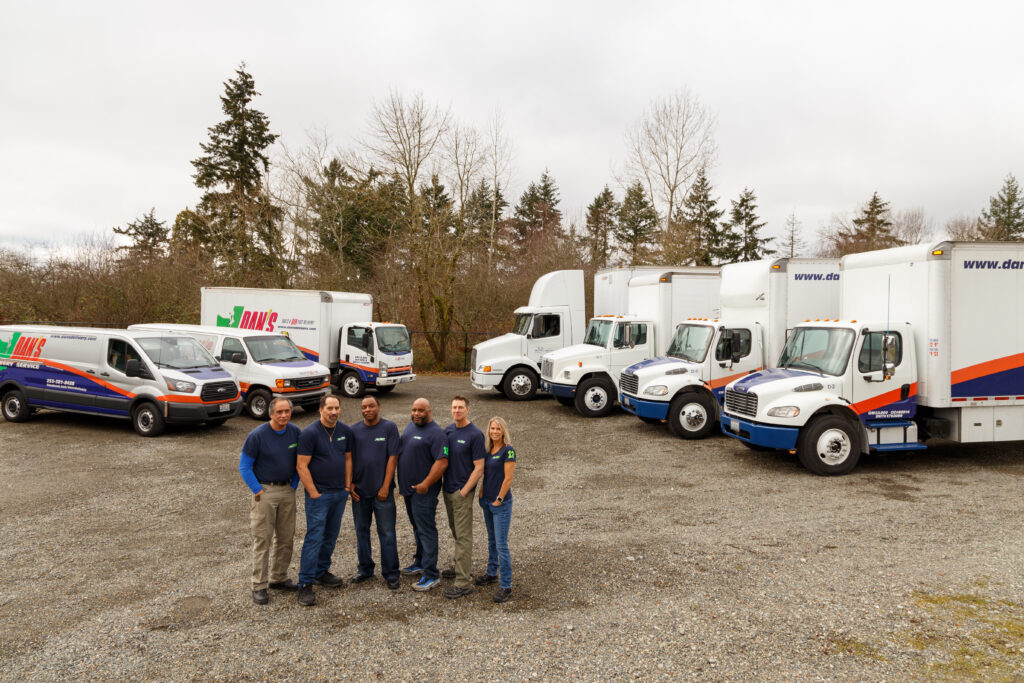
Dan’s Delivery thrives during the May and June transitions because we maintain personal, long-standing relationships with regional carriers who call Washington home. While national brokers lose their capacity to the highest bidder in the south, our network remains committed to the lanes and businesses that sustain our local economy.
We understand the specific nuances of Washington FTL freight rates and work tirelessly to provide our partners with price stability when the rest of the market is in chaos. Our team monitors the produce season’s impact on logistics in real-time, allowing us to pivot strategies and secure equipment before the “truck vacuum” reaches its peak.
Relying on a local expert ensures that your business remains a priority rather than just another entry on a digital screen.
Why Does Regional Expertise Outperform National Logistics Providers in May?
National providers often treat Washington as a secondary market, focusing their resources on the high-volume corridors of the Sunbelt during the spring.
In contrast, Dan’s Delivery views the Pacific Northwest as the primary theater of operations, ensuring our focus never wavers from the needs of local shippers. We possess the institutional knowledge to predict which lanes will tighten first and how to reroute freight to avoid the most congested hubs.
This level of granular detail allows us to protect our clients from the delays and service failures that plague larger, less focused firms.
By choosing a partner with a vested interest in the region, you gain a level of security that is simply unavailable on the open market. This regional dedication is the key to maintaining a smooth supply chain during the most volatile months of the year.